In-situ concrete flooring
Heavy-duty external concrete hardstandings engineered for exceptional loads, abrasion and the weather, for yards, service areas, lorry parks and plant bases.
The work
External hardstandings carry the heaviest loads on a site, from HGVs and plant to stacked materials, in all weathers. They need the right thickness, reinforcement and falls to last.
We design the build-up with the engineer, place to falls for drainage, and finish for grip and durability. Everything is laid by our own crews with our own plant, including our own line pumps where the pour face cannot be reached directly.
An external slab fails differently from an internal concrete floor. Water, frost, turning HGVs and point loads from trailer legs and stabilisers all attack it, and most failures trace back to three things: too thin for the actual loading, joints in the wrong place, or water sitting on the surface because the falls were an afterthought.
Estimators pricing both on the same project should treat them as separate problems.
What is the actual loading, not the assumed loading? Design for the vehicle that will really use it, including the worst case. Trailer leg point loads and the outriggers on plant are what break yards, and they are routinely left out of the brief.
How thick, and reinforced how? Slabs for exceptional loads such as commercial yards and lorry parks are substantial, and normally need a properly designed sub-base beneath them. Reinforcement is either steel mesh or structural fibres, and the choice affects crack control, joint spacing and the pour method.
What concrete grade? External hardstanding specifications commonly adopt grades in the C32/40 and RC40 range for durability and freeze-thaw resistance, and the Britpave Concrete Hardstanding Design Handbook is the usual reference document.
Where do the joints go? Joints in the wheel path of turning HGVs are where a yard starts to fail. Layout should follow the traffic and the drainage, not the convenience of the pour.
What surface texture? Grip, wear resistance and ease of cleaning pull in different directions. A brushed or tined finish gives grip. A power floated finish gives density and cleanability. The duty should decide.
Loading yards, bin stores and service areas need a slab that takes turning HGVs and point loads without cracking or ponding. These are the highest-wear areas on most industrial sites and they justify the design attention.
Continuous heavy vehicle movement, braking, turning and standing loads. Joint detailing and surface durability carry the slab here rather than flatness.
Bases for tanks, plant and equipment are set out and poured to tight tolerances against the supplier drawings. Holding-down bolt positions and levels come off the supplier's drawings, and getting them wrong is expensive to correct.
Tipping halls, transfer floors and external areas at waste and recycling facilities take some of the most aggressive wear in UK construction. Abrasion from loading shovels working against the slab is a recognised failure mode, with severe wear rates recorded across the sector. Build-up, concrete grade and surface finish all have to be specified for that duty rather than for a normal yard. We delivered heavy-duty external work for Veolia at Southampton. See also waste and energy floors.
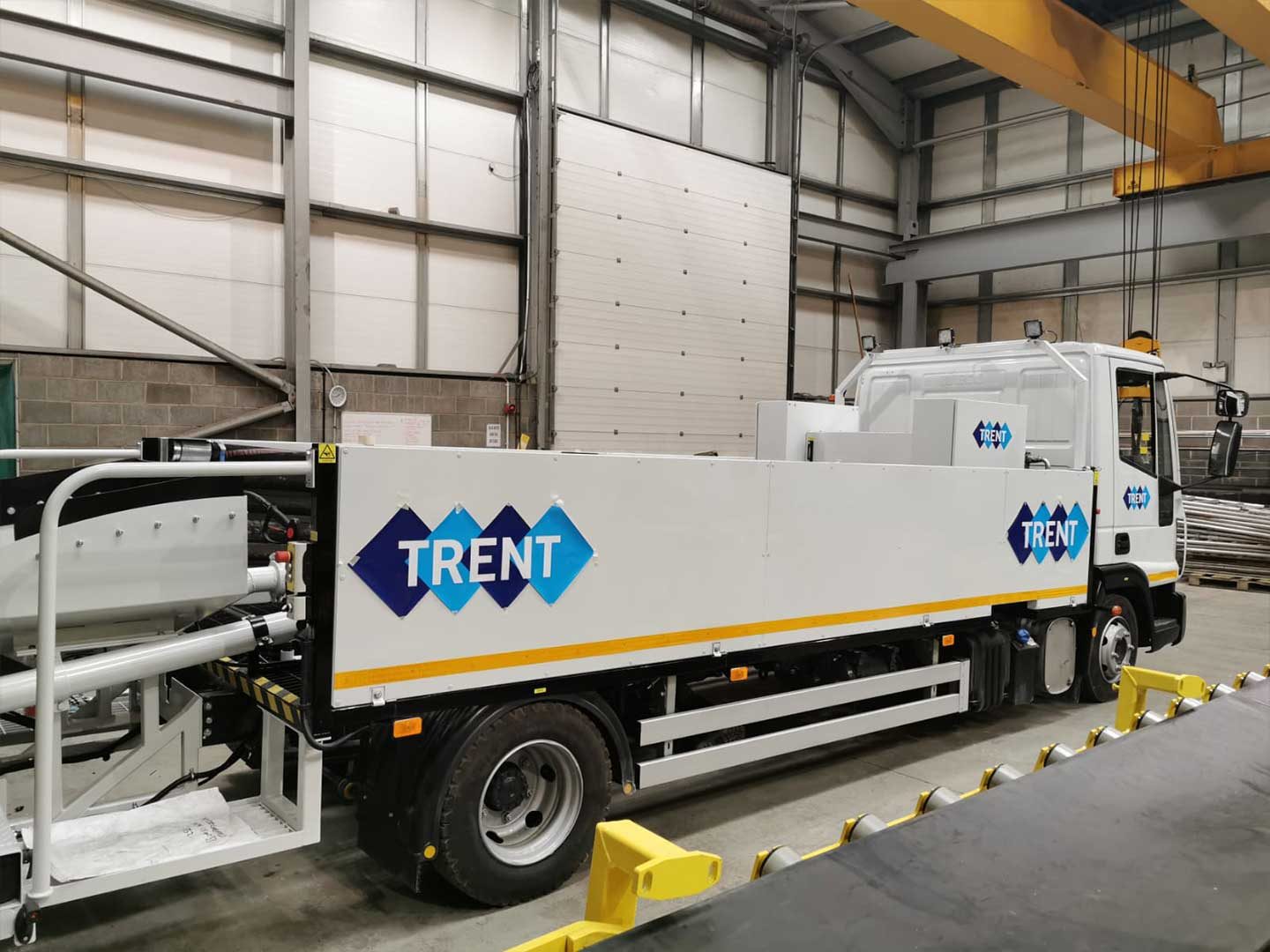
Our own operatives, our own power floats, our own concrete line pumps, and two track-mounted placing booms which are two of only three in the country.
External work often has access problems that internal work does not. Live yards that cannot close, gates too tight for a ready-mix truck to reach the pour face, existing surfaces that cannot take plant, and buildings in the way. Our own pumps and booms mean the concrete gets to where it is going without the yard having to shut down for a week.
Because the placing is ours, it is planned as part of the works. Pump positions, hose runs, delivery routes and wash-out are agreed before we mobilise, which matters more on a live yard than anywhere else.
Output on external work is set by access, weather and how much of the yard can be closed at once. On an open site with a clear delivery route it is fast. On a working yard released to us in sections, it is governed by the sections.
We programme around the operation rather than assuming it will stop. Curing times and access times for vehicles are given honestly, because putting HGVs on a slab too early is a good way to ruin it.
Constructionline Gold registered. Avetta and SSIP accredited. Member of the Nuclear Industry Association.
FAQs
Send us the drawings and the specification, and we'll tell you straight whether we can deliver it, and how.
Discuss your project