---
title: Secure & Regulated Site Flooring Contractor | Trent
description: Concrete flooring and screeding delivered to the vetting, documentation and protocols controlled sites require. Method-led, discreet, nationwide.
image: https://www.trentcs.com/hubfs/OG%20images/og-sectors-secure-regulated.png
---
- Services
[Concrete flooring](https://www.trentcs.com/concrete-flooring)
- [Power floated floors](https://www.trentcs.com/concrete-flooring/power-floated)
- [Hardstandings](https://www.trentcs.com/concrete-flooring/hardstanding)
- [Large pours](https://www.trentcs.com/concrete-flooring/large-pour)
[Screeds](https://www.trentcs.com/screeds)
- [Flowing screed](https://www.trentcs.com/screeds/flowing-screed)
- [Self-compacting](https://www.trentcs.com/screeds/self-compacting)
- [Precast plank](https://www.trentcs.com/screeds/precast-plank)
- [Concrete pumping](https://www.trentcs.com/concrete-pumping)
- Sectors
- [All sectors](https://www.trentcs.com/sectors)
- [Healthcare](https://www.trentcs.com/sectors/healthcare)
- [Data centres](https://www.trentcs.com/sectors/data-centres)
- [Industrial & logistics](https://www.trentcs.com/sectors/industrial-logistics)
- [Education](https://www.trentcs.com/sectors/education)
- [Waste & energy](https://www.trentcs.com/sectors/waste-energy)
- [Secure & regulated](https://www.trentcs.com/sectors/secure-regulated)
- [Projects](https://www.trentcs.com/projects)
- [Knowledge](https://www.trentcs.com/knowledge)
- [About](https://www.trentcs.com/about)
- [Main contractors](https://www.trentcs.com/main-contractors)
- [01283 480110](tel:01283480110)
- [Discuss your project](https://www.trentcs.com/contact)
[01283 480110](tel:01283480110)
☰
- Services
[Concrete flooring](https://www.trentcs.com/concrete-flooring)
- [Power floated floors](https://www.trentcs.com/concrete-flooring/power-floated)
- [Hardstandings](https://www.trentcs.com/concrete-flooring/hardstanding)
- [Large pours](https://www.trentcs.com/concrete-flooring/large-pour)
[Screeds](https://www.trentcs.com/screeds)
- [Flowing screed](https://www.trentcs.com/screeds/flowing-screed)
- [Self-compacting](https://www.trentcs.com/screeds/self-compacting)
- [Precast plank](https://www.trentcs.com/screeds/precast-plank)
- [Concrete pumping](https://www.trentcs.com/concrete-pumping)
- Sectors
- [All sectors](https://www.trentcs.com/sectors)
- [Healthcare](https://www.trentcs.com/sectors/healthcare)
- [Data centres](https://www.trentcs.com/sectors/data-centres)
- [Industrial & logistics](https://www.trentcs.com/sectors/industrial-logistics)
- [Education](https://www.trentcs.com/sectors/education)
- [Waste & energy](https://www.trentcs.com/sectors/waste-energy)
- [Secure & regulated](https://www.trentcs.com/sectors/secure-regulated)
- [Projects](https://www.trentcs.com/projects)
- [Knowledge](https://www.trentcs.com/knowledge)
- [About](https://www.trentcs.com/about)
- [Main contractors](https://www.trentcs.com/main-contractors)
- [Call 01283 480110](tel:01283480110)
- [Discuss your project](https://www.trentcs.com/contact)
[Home](https://www.trentcs.com/) / [Sectors](https://www.trentcs.com/sectors) / Secure & regulated
Sector
# Flooring for secure and regulated *sites.*
Trent Construction Services delivers concrete flooring and screeding for main contractors on secure and regulated sites across the UK, to the documentation, vetting and protocols those sites require.
The work
## Set up for the paperwork as well as the pour
Secure and regulated sites add layers of vetting, documentation and method control on top of the construction work itself. We are experienced in meeting them.
We describe this work by method only. Specific clients and facilities are never published, and that is not a marketing position, it is a condition of being allowed on the site in the first place.
If you are qualifying subcontractors for a defence, nuclear, utilities, custodial or critical infrastructure project, this page is written to answer the questions you have to ask before the price matters.
Photo slot: Secure & regulated project
On site
## Built around your operation, *not against it.*
We plan the method, phasing and plant so work continues around us and the floor goes down right first time.
Qualification
## What actually disqualifies a subcontractor here
Price is rarely why a flooring subcontractor fails to get onto a controlled site. These are the reasons, roughly in the order they come up. We are set up for all five: own operatives, own plant, documented method, and no published clients or facilities.
- **They cannot field a consistent, vetted team.** Vetting takes time and applies to individuals, not companies. A subcontractor resourcing jobs from a changing pool of agency labour cannot clear people fast enough, and every new face is a new application and a new escort.
- **They subcontract the work.** A second tier means a second set of people to vet, a second set of insurances and competencies to verify, and a chain of responsibility that a security-conscious client will not accept.
- **Their documentation is generic.** A method statement lifted from the last job does not survive a controlled-site review. RAMS have to be written for that site, that method, that access regime and that restriction set.
- **They cannot work to escorted, restricted access.** Limited windows, escorted movements, no phones, controlled tools and equipment, searched vehicles. Productivity assumptions built on open access do not survive contact with any of it.
- **They talk about it afterwards.** Publishing a client, a facility, a photograph or a location is the fastest way to never be invited back, and it puts the main contractor in a difficult position too.
Scoping
## The decision you are actually making
### How long is the vetting lead time?
Clearance is not instant, and it is sponsored by the client rather than held by us. Building it into the programme at tender is the difference between mobilising on time and not.
### What does escorted access cost in productivity?
Restricted windows, escorts, searches and controlled tool regimes all reduce output. It should be priced honestly rather than assumed away.
### What documentation does the site actually require?
It varies widely between defence, nuclear, custodial and utilities clients. Ask early, because retrofitting a documentation regime is painful.
### Is the site live?
Most regulated facilities are operational. The floor goes in around an operation that will not stop for it.
### Can the subcontractor reach the pour?
Security constraints frequently rule out the obvious placing method. Restricted vehicle access, no craning over live areas, and limited standing space are common.
Capability
## Self-delivery and vetting
Our floors, flowing and self-compacting screeds and pumping are delivered by our own operatives with our own plant. There is no agency gang and no gap in the chain of responsibility. Consistency of personnel is what makes this work: the same people, cleared once, returning to the site, is a fundamentally different proposition from a new gang every fortnight.
Our teams and processes are set up for controlled-site requirements. Constructionline Gold registered. ISO 9001 certified. ACIFC member. Cyber Essentials Plus, Avetta and SSIP accredited. Member of the Nuclear Industry Association.
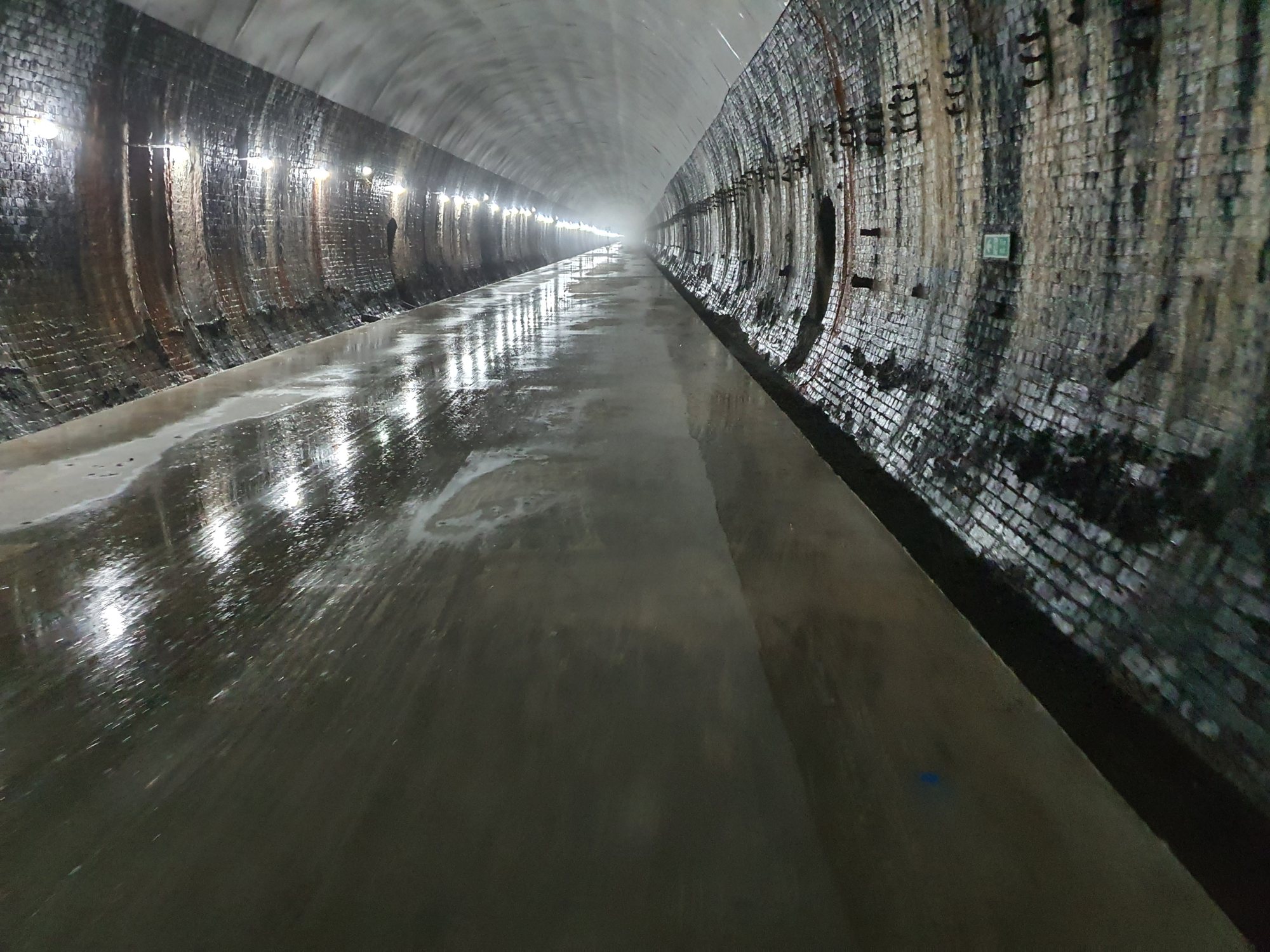
We have delivered pumped works in confined and constrained civils environments, including at [Catesby Tunnel](https://www.trentcs.com/knowledge/concrete-works-at-catesby-tunnel), pictured.
Method
## Documented method
RAMS are written for the site, not adapted from the last one. For controlled work that normally covers:
- Personnel list, competencies and vetting status
- Plant and equipment schedule, with controlled tool and equipment arrangements where required
- Access, escorting and movement arrangements
- Delivery routes, vehicle searches and standing arrangements
- Pour sequence and the finishing window it has to feed
- Wash-out location and disposal
- Waste, materials and substances brought on and taken off site
- Emergency and evacuation arrangements specific to the facility
- Photography, phone and information handling restrictions
Records at handover cover the flatness or surface regularity survey against the specified grade, cube results, pour records, joint layout as constructed, and curing method and durations. The same evidence pack as any other project, issued to the site's information handling rules.
Delivery
## Constraints handled
Live facilities, escorted access and restricted placing are normal on this sector. We plan for them at tender, not on the day.
- **Escorted and restricted access.** Short windows, controlled movement, searched vehicles, restricted equipment.
- **Live operational facilities.** The plant, the process or the institution keeps running. Phasing is designed around it.
- **Restricted placing.** Where vehicle access is limited or craning over live areas is not permitted, our own line pumps and track-mounted placing booms place the concrete. Rare kit in this country, and it sets up without a crane. See [concrete pumping](https://www.trentcs.com/concrete-pumping).
- **Information restrictions.** No published clients, facilities, locations or photographs. Case studies from this sector are described by method only or not at all.
- **Consistent personnel.** Cleared teams returning to site rather than a changing gang.
Systems
## What we install on these sites
### [Service Concrete flooring Power floated slabs, large pours and external hardstandings for plant areas and yards. Read more](https://www.trentcs.com/concrete-flooring)
### [Service Screeds Flowing, liquid and self-compacting systems, and screeds on precast decks. Read more](https://www.trentcs.com/screeds)
Capability
### Own placing plant
Both delivered with our own placing plant, which is frequently the reason we can work where others cannot.
FAQs
## Common questions
Can you work on secure and regulated sites?
Yes. We are set up for the vetting, documentation and protocols controlled sites require, with our own operatives and our own plant.
How long does vetting take?
Our operatives hold BPSS and SC clearance. Clearance is sponsored by the client, who runs the process, and as a guide BPSS takes around a month and SC around three months. Build it into the programme at tender rather than discover it at mobilisation.
Will you name secure clients or facilities?
No. We describe this work by method only, with no named clients, facilities, locations or photographs. That is a condition of the work, not a preference.
Do you provide full RAMS and records?
Yes. Method statements written for that site and that access regime, plus the full evidence pack at handover, issued to the site's information handling rules.
Do you use your own operatives?
Yes. Our own operatives deliver our floors, flowing and self-compacting screeds and pumping, with our own plant.
Can you place concrete where vehicle access is restricted?
Yes. Our line pumps and track-mounted placing booms reach pour faces that ready-mix cannot, and the booms set up without a crane, which matters where craning over live areas is not permitted.
Related
[Service**Power floated floors***→*](https://www.trentcs.com/concrete-flooring/power-floated)[Service**Concrete pumping***→*](https://www.trentcs.com/concrete-pumping)[Sector**Data centres***→*](https://www.trentcs.com/sectors/data-centres)
Guides and case studies
[Guide**What track-mounted placing booms change on site***→*](https://www.trentcs.com/knowledge/track-mounted-concrete-placing-booms-uk)[Case study**Concrete works at Catesby Tunnel***→*](https://www.trentcs.com/knowledge/concrete-works-at-catesby-tunnel)
## Got a flooring or screed *project coming up?*
Send us the drawings and the specification, and we'll tell you straight whether we can deliver it, and how.
[Discuss your project](https://www.trentcs.com/contact)
Specialist concrete flooring and screed subcontractor. Our own teams and plant, finished to specification. Nationwide.
 Certificate No. 292582018
Services
- [Concrete flooring](https://www.trentcs.com/concrete-flooring)
- [Screeds](https://www.trentcs.com/screeds)
- [Concrete pumping](https://www.trentcs.com/concrete-pumping)
- [Projects](https://www.trentcs.com/projects)
Company
- [About](https://www.trentcs.com/about)
- [Sectors](https://www.trentcs.com/sectors)
- [Main contractors](https://www.trentcs.com/main-contractors)
- [Knowledge](https://www.trentcs.com/knowledge)
- [Contact](https://www.trentcs.com/contact)
Contact
- **Head office**
Trent House, Bridge Park,
Wetmore Road, Burton on Trent,
DE14 1PW
- **Aldermaston**
Suite 1 Calleva Business Centre,
Calleva Park, Aldermaston,
Berkshire, RG7 8UA
- [01283 480110](tel:01283480110)
- [info@trentcs.com](mailto:info@trentcs.com)
© 2026 Trent Construction Services Ltd. All rights reserved. [Privacy](https://www.trentcs.com/legal#privacy) · [Cookies](https://www.trentcs.com/legal#cookies) · [Terms](https://www.trentcs.com/legal#terms) ·
Cookie settings
Laid to last.
```json
{
"@context" : "https://schema.org",
"@type" : "FAQPage",
"mainEntity" : [ {
"@type" : "Question",
"acceptedAnswer" : {
"@type" : "Answer",
"text" : "Yes. We are set up for the vetting, documentation and protocols controlled sites require, with our own operatives and our own plant."
},
"name" : "Can you work on secure and regulated sites?"
}, {
"@type" : "Question",
"acceptedAnswer" : {
"@type" : "Answer",
"text" : "Our operatives hold BPSS and SC clearance. Clearance is sponsored by the client, who runs the process, and as a guide BPSS takes around a month and SC around three months. Build it into the programme at tender rather than discover it at mobilisation."
},
"name" : "How long does vetting take?"
}, {
"@type" : "Question",
"acceptedAnswer" : {
"@type" : "Answer",
"text" : "No. We describe this work by method only, with no named clients, facilities, locations or photographs. That is a condition of the work, not a preference."
},
"name" : "Will you name secure clients or facilities?"
}, {
"@type" : "Question",
"acceptedAnswer" : {
"@type" : "Answer",
"text" : "Yes. Method statements written for that site and that access regime, plus the full evidence pack at handover, issued to the site's information handling rules."
},
"name" : "Do you provide full RAMS and records?"
}, {
"@type" : "Question",
"acceptedAnswer" : {
"@type" : "Answer",
"text" : "Yes. Our own operatives deliver our floors, flowing and self-compacting screeds and pumping, with our own plant."
},
"name" : "Do you use your own operatives?"
}, {
"@type" : "Question",
"acceptedAnswer" : {
"@type" : "Answer",
"text" : "Yes. Our line pumps and track-mounted placing booms reach pour faces that ready-mix cannot, and the booms set up without a crane, which matters where craning over live areas is not permitted."
},
"name" : "Can you place concrete where vehicle access is restricted?"
} ]
}
```
```json
{
"@context" : "https://schema.org",
"@type" : "BreadcrumbList",
"itemListElement" : [ {
"@type" : "ListItem",
"item" : "https://www.trentcs.com/",
"name" : "Home",
"position" : 1
}, {
"@type" : "ListItem",
"item" : "https://www.trentcs.com/sectors",
"name" : "Sectors",
"position" : 2
}, {
"@type" : "ListItem",
"name" : "Secure & regulated",
"position" : 3
} ]
}
```
```json
{
"@context" : "https://schema.org",
"@id" : "https://www.trentcs.com/#organization",
"@type" : "Organization",
"address" : {
"@type" : "PostalAddress",
"addressCountry" : "GB",
"addressLocality" : "Burton on Trent",
"addressRegion" : "Staffordshire",
"postalCode" : "DE14 1PW",
"streetAddress" : "Trent House, Bridge Park, Wetmore Road"
},
"areaServed" : {
"@type" : "Country",
"name" : "United Kingdom"
},
"audience" : {
"@type" : "BusinessAudience",
"audienceType" : "Main contractors and clients on commercial construction projects"
},
"contactPoint" : {
"@type" : "ContactPoint",
"areaServed" : "GB",
"availableLanguage" : "English",
"contactType" : "sales",
"email" : "info@trentcs.com",
"telephone" : "+441283480110"
},
"description" : "Specialist concrete flooring and screed subcontractor for main contractors and clients on commercial projects across the UK, including live, restricted-access and constrained sites. No domestic or self-build work.",
"email" : "info@trentcs.com",
"foundingDate" : "2012-03-13",
"hasCredential" : [ {
"@type" : "EducationalOccupationalCredential",
"credentialCategory" : "certification",
"name" : "Constructionline Gold"
}, {
"@type" : "EducationalOccupationalCredential",
"credentialCategory" : "certification",
"name" : "Avetta accredited"
}, {
"@type" : "EducationalOccupationalCredential",
"credentialCategory" : "certification",
"name" : "SSIP member"
}, {
"@type" : "EducationalOccupationalCredential",
"credentialCategory" : "certification",
"name" : "ISO 9001"
}, {
"@type" : "EducationalOccupationalCredential",
"credentialCategory" : "certification",
"name" : "Cyber Essentials Plus"
} ],
"identifier" : {
"@type" : "PropertyValue",
"propertyID" : "Companies House company number",
"value" : "07988958"
},
"knowsAbout" : [ "Power floated concrete floors", "Laser screed concrete flooring", "Concrete hardstanding", "Flowing screed", "Self-compacting screed", "Screeds on precast planks", "Concrete pumping and placing booms" ],
"legalName" : "Trent Construction Services Ltd",
"location" : [ {
"@type" : "Place",
"address" : {
"@type" : "PostalAddress",
"addressCountry" : "GB",
"addressLocality" : "Burton on Trent",
"addressRegion" : "Staffordshire",
"postalCode" : "DE14 1PW",
"streetAddress" : "Trent House, Bridge Park, Wetmore Road"
},
"name" : "Head office"
}, {
"@type" : "Place",
"address" : {
"@type" : "PostalAddress",
"addressCountry" : "GB",
"addressLocality" : "Aldermaston",
"addressRegion" : "Berkshire",
"postalCode" : "RG7 8UA",
"streetAddress" : "Suite 1 Calleva Business Centre, Calleva Park"
},
"name" : "Aldermaston office"
} ],
"memberOf" : [ {
"@type" : "Organization",
"alternateName" : "ACIFC",
"name" : "Association of Concrete Industrial Flooring Contractors"
}, {
"@type" : "Organization",
"name" : "Nuclear Industry Association"
} ],
"name" : "Trent Construction Services",
"sameAs" : [ "https://find-and-update.company-information.service.gov.uk/company/07988958" ],
"slogan" : "Laid to last.",
"telephone" : "+441283480110",
"url" : "https://www.trentcs.com/"
}
```
```json
{
"@context" : "https://schema.org",
"@id" : "https://www.trentcs.com/#website",
"@type" : "WebSite",
"description" : "Specialist concrete flooring and screed subcontractor working on live, restricted-access and constrained sites nationwide.",
"inLanguage" : "en-GB",
"name" : "Trent Construction Services",
"publisher" : {
"@id" : "https://www.trentcs.com/#organization"
},
"url" : "https://www.trentcs.com/"
}
```